menu Menu SCOUTING EVERYWHERE search Search
arrow_back Back

Scouting Everywhere

The site is under development. Please bary the UI glitches.

Showing posts with label Basics. Show all posts
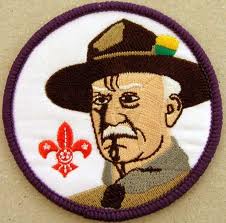
Baden Powell - Chief Scout
Sunday, February 26, 2012

   Lord Robert Baden-Powell of Gilwell (1857-1941) was a decorated soldier, talented artist, actor and free-thinker. Best known during his military career for his spirited defense of the small South African township of Mafeking during the Boer War, he was soon to be propelled to extraordinary fame as the Founder of Scouting. 

GROWING UP
   Robert Stephenson Smyth Baden-Powell, known as B-P, was born at 6 Stanhope Street (now 11, Stanhope Terrace) Paddington, London on 22nd February 1857. He was the sixth son and the eighth of ten children of the Reverend Baden Powell, a Professor at Oxford University.
His father died when B-P was only three years old and the family were left none too well off.
   B-P was given his first lessons by his mother and later attended Rose Hill School, Tunbridge Wells, where he gained a scholarship for admittance to Charterhouse School. Charterhouse School was in London when B-P first attended but whilst he was there it moved to Godalming in Surrey, a factor which had great influence later in his life. He was always eager to learn new skills and played the piano and the violin. While at Charterhouse he began to exploit his interest in the arts of scouting and woodcraft.
In the woods around the school B-P would hide from his masters as well as catch and cook rabbits, being careful not to let tell-tale smoke give his position away. The holidays were not wasted either. With his brothers he was always in search of adventure. One holiday they made a yachting expedition round the south coast of England. On another, they traced the Thames to its source by canoe. Through all this Baden-Powell was learning the arts and crafts which were to prove so useful to him professionally.
Not known for his high marks at school, B-P nevertheless took an examination for the Army and placed second among several hundred applicants. He was commissioned straight into the 13th Hussars, bypassing the officer training establishments. Later he became their Honorary Colonel.

MILITARY LIFE
   In 1876 he went to India as a young army officer and specialised in scouting, map-making and reconnaissance. His success soon led to his training other soldiers. B-P's methods were unorthodox for those days; small units or patrols working together under one leader, with special recognition for those who did well. For proficiency, B-P awarded his trainees badges resembling the traditional design of the north compass point. Today's universal Scout badge is very similar.
Later he was stationed in the Balkans, South Africa and Malta. He returned to Africa to help defend Mafeking during its 217-day siege at the start of the Boer war. It provided crucial tests for B-P's scouting skills. The courage and resourcefulness shown by the boys in the corps of messengers at Mafeking made a lasting impression on him. In turn, his deeds made a lasting impression in England.
Returning home in 1903 he found that he had become a national hero. He also found that the small handbook he had written for soldiers ("Aids to Scouting") was being used by youth leaders and teachers all over the country to teach observation and woodcraft.
He spoke at meetings and rallies and whilst at a Boys' Brigade gathering he was asked by its Founder, Sir William Smith, to work out a scheme for giving greater variety in the training of boys in good citizenship.

BEGINNINGS OF THE MOVEMENT
   B-P set to work rewriting "Aids to Scouting", this time for a younger audience. In 1907 he held an experimental camp on Brownsea Island, Poole, Dorset, to try out his ideas. He brought together 22 boys, some from private schools and some from working class homes, and took them camping under his leadership. The whole world now knows the results of that camp.
   "Scouting for Boys" was published in 1908 in six fortnightly parts. Sales of the book were tremendous. Boys formed themselves into Scout Patrols to try out ideas. What had been intended as a training aid for existing organisations became the handbook of a new and ultimately worldwide Movement. B-P's great understanding of boys obviously touched something fundamental in the youth of England and worldwide. "Scouting for Boys" has since been translated into more than 35 languages.
Without fuss, without ceremony and completely spontaneously, boys began to form Scout Troops all over the country. In September 1908 Baden-Powell had set up an office to deal with the large number of enquiries which were pouring in.
   Scouting spread quickly throughout the British Empire and to other countries until it was established in practically all parts of the world.
He retired from the army in 1910, at the age of 53, on the advice of King Edward VII who suggested that he could now do more valuable service for his country within the Scout Movement.
With all his enthusiasm and energy were now directed to the development of Boy Scouting and Girl Guiding, he travelled to all parts of the world, wherever he was most needed, to encourage growth and give inspiration.
In 1912 he married Olave Soames who was his constant help and companion in all this work. They had three children (Peter, Heather and Betty). Lady Olave Baden-Powell was later known as World Chief Guide.

CHIEF SCOUT OF THE WORLD
   The first international Scout Jamboree took place at Olympia, London in 1920. At its closing scene B-P was unanimously acclaimed as Chief Scout of the World.
   At the third World Jamboree, held in Arrowe Park, Birkenhead, England, the Prince of Wales announced that B-P would be given Peerage by H.M. the King. The news was received with great rejoicing. B-P took the title of Lord Baden-Powell of Gilwell; Gilwell Park being the international training centre he had created for Scout leaders.
B-P wrote no fewer than 32 books. He received honorary degrees from at least six Universities. In addition, 28 foreign orders and decorations and 19 foreign Scout awards were bestowed upon him.
In 1938, suffering from ill-health, B-P returned to Africa, which had meant so much in his life, to live in semi-retirement at Nyeri, Kenya. Even there he found it difficult to curb his energies, and he continued to produce books and sketches.
   On January 8th, 1941, at 83 years of age, B-P died. He was buried in a simple grave at Nyeri within sight of Mount Kenya. On his head-stone are the words "Robert Baden-Powell, Chief Scout of the World" surmounted by the Boy Scout and Girl Guide Badges. Lady Olave Baden-Powell carried on his work, promoting Scouting and Girl Guiding around the world until her death in 1977. She is buried alongside Lord Baden-Powell at Nyeri.
READ MORE
How To Make A Scout Scarf / Necker


Since the founding of the Scout Movement a century ago, Scouts have worn rolled triangular neckers. Each troop has their own colours. It is important that neckers look smart so that Scouts will feel pride in belonging to their troop and the Scout Movement.
Making a necker is not a difficult sewing job, but there are details that must be done correctly. These are the to most common mistakes:
    Image of a 
necker with threads parallel to the long side
  • Sizing: Neckers are often made too small and occasionally too big. See below for proper sizing.
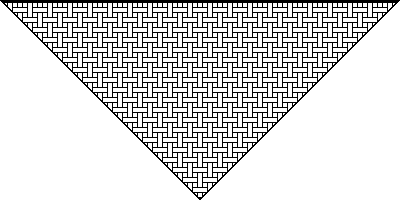
  • Cloth Orientation: If the cloth is not oriented correctly to the necker, the necker will be very difficult to role and will not hang properly. A necker has one long side and two short sides. The long side must be parallel to the warp or weft of the cloth. The two short sides must be parallel to the bias. This image shows how the threads in the cloth must be oriented:
Most neckers are either a single solid colour, a solid colour with different-coloured trim, or half one colour and half another. Many also have a crest sewn to the point. These instructions are for making a necker with coloured trim. Leave out any steps that do not apply to the necker you are making.
  1. Cut a right-isosceles triangle of the main colour. Follow the sizing below and make sure the two short sides are parallel to the bias.
  2. Finish the long edge of the necker (without any trim). It the necker does not have trim, finish all the sides. (If the long edge is the finished edge of the bolt of cloth, no edging is needed.)
  3. Cut 10 cm (4″) wide strips of the trim colour.
  4. Fold the trim strips in half, press, open out, and fold the raw edges towards centre fold (similar to bias tape). The finished stripes on the edges should be 2.5 cm (1″) wide.
  5. Attach the trim to the two short sides of the triangles and finish the ends by turning inside, making a point. At the point where the two short sides meet, the two pieces of trim should meet at a seam 45° from each side, so that it is symmetrical.
  6. If there is a crest, sew it to the right angled point so that it is about 1 cm (½″) from the trim.

Proper Sizing

Neckers tend to be made too small. Sometimes, they are made too big. Please follow these standard sizes. These sizes are for the finished necker. When cutting, cut enough extra to allow for whatever edging you will be doing.
The small size is for Beavers. The regular size fits most youth (except Beavers) and many adults. Larger Scouts and adults should wear the long size.
Necker SizeLong SideTwo Short Sides
Small93 cm (36¾″)66 cm (26″)
Regular106 cm (41¾″)75 cm (29½″)
Long125 cm (49¼″)88 cm (34¾″)
READ MORE
Fleur-De-Lis
Thursday, February 9, 2012

     The fleur-de-lis is the main element in the logo of most Scouting organizations, representing a major theme in Scouting: the outdoors and wilderness. The three petals or leaves represent the threefold Scout Promise (Duty to God and Country, Duty to Self, Duty to Others) in much the same way as the three leaves of the trefoil represent the threefold promise for the Guides. Robert Baden-Powell, the founder of the Scouting movement, explained that the Scouts adopted the fleur-de-lis symbol from its use in the compass rose because it "points in the right direction (and upwards) turning neither to the right nor left, since these lead backward again." The two small five-point stars stand for truth and knowledge. Together their ten points represent the ten original Scout laws. The reef knot or square knot represents the strength of World Scouting. The rope is for the unity of Scouts throughout the world. The ring holding the petals together represents the bond of brotherhood.
READ MORE
Uniform
Monday, August 15, 2011
The Scout Uniform Compulsory:
  1. Shirt: A gray color shirt with half sleeves, two patch packets and shoulder strips. (Olive green or navy blue/jersey may be worn over the shirt.) Sleeves may be turned down in cold weather.
  2. Shorts: A navy blue shorts or trousers.
  3. Head dress: A navy blue beret cap with the official badge; a Sikh may wear a turban.
  4. Belt: Brown leather or khakhi web belt with the official buckle of B.S. & G.
  5. Scarf: A triangular scarf of the group color other than yellow, green and purple) approved by the local or District Association with the two sides not less than 70 cms and not more than 80 cms in length.
  6. Membership badge: A cloth badge with green background and the Fleur-de-lis in yellow superimposed by the trefoil with Ashoka Chakra in the center, worn on the middle of the left pocket or at the same place on Jersey/Coat.
  7. Shoulder badge: 8 cms in length and 1.5 cms in width with white background and name of the group in red letters shall be worn on the right shoulder below the seam. 
  8. Shoulder strips: Two shoulder stripes indicating the name of the patrol each 5 cms x 1.5 cms. Each 2 cms apart at the top of the left sleeve immediately below the seam. 
The Scout Uniform Optional:
  1. Stockings or socks: Black of khaki (if stockings) with green garter tabs 1.5 cms visible.
  2. Footwear: Brown or black shoes.
  3. Knife: A Scout knife may be carried on the belt.
  4. Staff: Made of natural wood of such length to be in line with the ear.
  5. World scout badge: Made of cloth may be worn in the middle of the right pocket when in uniform.
READ MORE
Saraswti Vandana - All Faith Prayer
Thursday, August 11, 2011


Ya kundendu tusharahara dhavala, ya shubhravastravrita,
Ya vina brahmachyutashankaraprabhritibhir devaisadavandita.
Sa mam patu saraswati bhagvati, nihshesh jadya paha.


READ MORE
Pratah Smaran - All Faith Prayer


Pratah smarami ridi sansfuradatma tatvam,
Sat chit sukham paramhansagatim turiyam,
Yat swapna jagar sushuptamavaiti Nityam,
Tad brahma nishkalamaham na cha bhut sanghah…(1)
Pratarbhajami manso vachasamagamyam,
Vacho vibhanti nikhila yadanugrahena,
Yanneti neti vachanair nigamamavochus,
Tam deva deva majamachyuta rahuragryma….(2)
 Pratar namami tamaso paramarkavarnam,
Punam sanatana padam purushottamakhyam,
Yasmin idam jagadasheshamashesh murti,
Rajva bhujangmaiva pratibhashitam vai….(3)
READ MORE
World Scout Flag
Thursday, July 7, 2011
World Scout Flag

The flag is actually royal purple with the white fleur-de-lis and rope is the flag for the World Organization of Scouting Movements (WOSM), headquartered in Switzerland. The flag represents all member organizations of the WOSM in a like manner as the United Nations flag represents all member nations of the UN.

The flag is taken from the fleur-de-lis, or lily of the flower, which as the previous poster wrote, is found as part of the Scout emblem of every other nations’ Scouting organizations. It is also found frequently on compasses and pointing devices and points in the true direction, as Scouts should also be moving positively toward.

The two stars on the flag allude to truth and knowledge, the two most important elements found in the creeds, promises and oaths of all member organizations. They also remind us of the stars in the sky and the outdoor element of Scouting.

The rope encircles the fleur-de-lis and a reminder of the true brotherhood of all WOSM members. The rope is tied at the bottom in the reef knot (we Americans call it the square knot), which is the most useful of all rope knots if tied properly and reminds all of our obligations to be of service to one another as well as to be usefu
READ MORE
Bharat Scouts And Guides Flag
   
  
The Bharat Scouts and Guides Flag shall be in dark blue color, the emblem in yellow colour shall be in the center of the flag with Ashoka Chakra in blue color. The size of the flag shall be 180 cms. In length and 120 cms. in width, the emblem will be 45 cms by 39 cms. The size of the Group Flag, which is the same as above, shall be 180 cms X 120 cms. with proportionate emblem. The name of the group shall be written in a yellow color below the emblem in straight line. The Fleur-de-lis the International emblem of Scouting and Ashoka Chakra is meant to emphasize the all-India character of the Movement. The super imposed trefoil represents the guide wing of the B.S.&G.
READ MORE
Indian Flag
Indian Flag

Shape : Rectangle
Ratio : 3:2
Colours :
  • Saffron-Sacrifice 
  • White-Purity&Peace 
  • Bottle Green-Prosperity
Ashok Chakra :  Navy Blue . It is a Wheel Of Dharma. It Has 24 spokes which denote the 24 Hours of a day.
READ MORE
National Anthem
Wednesday, July 6, 2011
Author : Rabindranath Tagore
Duration : 52 seconds
Language : Bengali
 
Jana gana mana adhinayaka jaya he
Bharata bhagya bidhata
Panjaba Sindhu Gujarata Maratha
Dravida Utkala Banga
Bindhya Himacala Yamuna Ganga
Ucchala jaladhi taranga
Taba subha name jage
Taba subha asisa mage
Gahe taba jaya gatha
Jana gana mangala dayaka jaya he
Bharata bhagya bidhata
Jaya he jaya he jaya he
Jaya jaya jaya jaya he!
READ MORE
Sign & Salute

Scout Sign
           The three-finger salute is used by members of Scout and Guide organizations around the world when greeting other Scouts and in respect of a national flag at ceremonies. In most situations, the salute is made with the palm face out, the thumb holding down the little finger, and with the fingertips on the brow of the head. There are some variations of the salute between national Scouting organisations and also within some programme sections.
            A "half-salute", known as the Scout Sign, is also used in certain situations. The hand is still held palm facing out, and the thumb holding the little finger, but the hand is held at the shoulder instead. Other organizations with historical ties to Scouting such a Scouts Royale Brotherhood do as well.

Meaning Of Three Fingers
     In his book, Scouting for Boys, Robert Baden-Powell chose the three-finger salute for Scouts to represent the three aspects of the Scout Promise:
1. Honour God and the King
2. Help Others
3. Obey the Scout Law
READ MORE
Handshake

Scout Handshake
          The left-handed Scout handshake is a formal way of greeting other Scouts of both genders used by members of Scout and Guide organizations around the world when greeting other Scouts. The handshake is made with the hand nearest the heart and is offered as a token of friendship. In most situations, the handshake is made firmly, without interlocking fingers, and many organizations only use this handshake when both people are in uniform. There are some variations of the handshake between national Scouting organizations and also within some program sections.
          The 1935 Boy Scout Handbook says that "By agreement of the Scout Leaders throughout the world, Boy Scouts greet Brother Scouts with a warm left hand clasp."
         All World Association of Girl Guides and Girl Scouts members share the left handshake, and when meeting other Girl Guides and Girl Scouts, it may be used in conjunction with the Girl Scout sign done with the right hand.
         Various sources have attributed the origin of the handshake, as an ancient sign of bravery and respect, to Lord Baden-Powell's encounter after battle with Prempeh I, or to earlier published works by Ernest Thompson Seton. There exist various versions of the Prempeh story, all centering around African warriors using the left hand to hold their shields and to lower it and shake the left hand of the person was to show they trusted each other.
According to the Ashanti warrior version of the story, then-Colonel Baden-Powell saluted them with his right hand, but the Ashanti chiefs offered their left hands and said, "In our land only the bravest of the brave shake hands with the left hand, because to do so we must drop our shields and our protection." The Ashantis knew of Baden-Powell's bravery because they had fought against him and with him, and they were proud to offer the left hand of bravery.
         The term itself was used as the title of a work by Hilary Saint George Saunders, The Left Handshake: The Boy Scout Movement during the War, 1939-1945, because of the extraordinary courage shown during those times. According to the foreword by British Chief Scout Lord Rowallan,
When Colonel Baden-Powell entered the capital city of the Ashanti people in 1890 he was met by one of the Chiefs who came to him holding out his left hand. B.-P. held out his right in return but the Chief said: "No, in my country the bravest of the brave shake with the left hand." So began the "left handshake" of the world-wide brotherhood of Scouts. In this book are told some of the stories of courage and endurance shown by Scouts in many different countries during the war of 1939-45. There would not be room even in many books to tell them all. Many, indeed, can never be told; some for political reasons, some because the actors died unknown. They remembered their Promise, to do their best to do their duty to God, and their Country; to think of other people and not themselves. So, when the time came, they were prepared in body and in spirit to render their service. Their record is unsurpassed; they were "the bravest of the brave."
The left hand is also closer to the heart, with that attendant symbolism.

READ MORE
Motto
     The Scout Motto of the Scout Movement, in various languages, has been used by millions of Scouts around the world since 1907. Most of the member organizations of the World Association of Girl Guides and Girl Scouts (WAGGGS) share this same motto.


     In English, this motto is most commonly Be Prepared, and it is no coincidence that this motto can be shortened to B. P. and Robert Baden-Powell, the founder of the movement, used to shorten his surname into B.-P.


In the third part of Scouting for Boys Robert Baden-Powell explains the meaning of the phrase: 
 The Scout Motto is: BE PREPARED which means you are always in a state of readiness in mind and body to do your DUTY.

  • Be Prepared in Mind by having disciplined yourself to be obedient to every order, and also by having thought out beforehand any accident or situation that might occur, so that you know the right thing to do at the right moment, and are willing to do it.
  • Be Prepared in Body by making yourself strong and active and able to do the right thing at the right moment, and do it.

"To do the right thing at the right moment" can be extreme:

"Where a man has gone so far as to attempt suicide, a Scout should know what to do with him."
"BE PREPARED to die for your country if need be, so that when the moment arrives you may charge home with confidence, not caring whether you are going to be killed or not"

READ MORE
Flag Song

Author:Dayal Shankar Butt
Duration:45 seconds
Language:Hindi

Bharat Scout Guide Jhanda
Ooncha Sada Rahega
Ooncha Sada Rahega Jhanda
Ooncha Sada Rahega
Neela Rang Gagan Sa Vistruta
Bhratru Bhav Phailatha
Tridal Kamala Nitha Theen Prathingya
Onki Yaad Dilata
Aur Chakra Kahata Hai Prathipal
Aage Kadam Badhega
Ooncha Sada Rahega Jhanda
Ooncha Sada Rahega
Bharat Scout Guide Jhanda
Ooncha Sada Rahega
READ MORE
Prayer Song

Author:Veer Dev Veer
Duration:90 seconds 
Language:Hindi

Daya Kar daan Bhakti ka
Hamain Paramatma Dena
Daya Karna Hamari Atma Main
Sudhata Dena

Hamarae Dhayan main Aavo
Prabhu Ankho main Bas Javo
Andhere Dil main aakar ke
Param Jyoti Jaga Dena

Bahado Prem Ki Ganga
Dilo Main Prem Ka Sagar
Hamin Aapas Main miljul kar
Prabhu Rahena Sikha Dena

Hamara Karma Ho Seva
Hamara Dharma Ho Seva
Sada eeman Ho Seva
Vasevak Char Bana Dena

Vatan Ke Vaste Jeena
Vatan Ke Vaste Marna
Vatan Par Jaan Fida Karna
Prabhu Ham ko Sikha Dena

Daya Kar Daan Bhakti Ka
Hamain Paramatma Dena
Daya Karna Hamari Atma Main
Shudhata Dena
READ MORE
Law

  1. A Scout is Trustworthy
  2. A Scout is Loyal 
  3. A Scout is a friend to all and a brother to every other Scout.
  4. A Scout is Courteous
  5. A Scout is a friend to animals and loves nature.
  6. A Scout is disciplined and helps protect public property.
  7. A Scout is Courageous.
  8. A Scout is Thrifty.
  9. A Scout is pure in thought, word and deed.
READ MORE
Promise

 
On my honour, I promise that I will do my best
To do my duty to God and my country,
To help other people,
And to obey the Scout Law.


  At the investiture as a Scout or Guide you will make the Scout or Guide Promise in front of the Troop.
 The Scout or Guide Promise is a difficult one to keep, but it is the most serious one and no boy is a Scout and no girl is a Guide unless He/She does his best to live up to the Promise.

READ MORE
BP's Six Exercises
Friday, July 1, 2011
For The Head
  • For the Head: Rub the head and face, firmly over several times with the palms and fingers of both hands. Thumb the muscles of the neck and throat. 
 
  • For the Chest: From upright position bend to the front, arms stretched downwards, with back of the hands together in front of the knees. Breathe out. Raise the hand gradually over the head and lean back as far as possible, drawing a deep breath through the nose as you do. Lower the arms gradually to the sides, breathing out the word "Thanks" through the mouth. Lastly, bend forward again, breathing out the last bit of breath in you, and saying the number of times you have done it in order to keep count.Repeat this exercise 12 times.
 
  • For the Stomach: Standing upright, send out both arms, fingers extended, straight to the front, then slowly swing round to the right from the hips without moving the feet, and point the right arms as far round behind you as you can, keeping both arms level with, or a little higher than, the shoulders. Then, after a pause, swing slowly round as far as you can to the left. Breathe in when pointing to the left. "Body twisting". Breathe out when pointing to the right. Repeat six times, change the breathing to the other side and repeat six times. 
 
  • For the Trunk: This is also called the "Cone Exercise". Standing at "Attention" position, raise both hands, as high as possible over the head, and link fingers. Lean backwards, and then sway the arms very slowly round in the direction of a cone, so that the hands make a wide circle above and around the body, the body turning from the hips, and leaning over one side. Then to the front, then to the other side, and then back. After completing the circle, start in the opposite direction. Repeat six times both ways. Breathe in when leaning backward and breathe out when leaning forward. 
 
  • For Lower Body and Back of Legs: Stand with feet slightly apart, touch your head with both hands and look up into the sky, leaning back as far as you can, and then bend forward and downward till your fingers touch your toes, without bending your knees.Repeat 12 times.
 
  • For Legs, Feet and Toes: Stand in 'Attention' position, put the hands on the hips, stand on tip-toe, turn the knees outwards, and bend them slowly down to a squatting position, keeping the heels off the ground the whole time. Then gradually raise the body and come to the first position again. Repeat this 12 times. Breathe in as body rises and breathe out as the body sinks. 
    READ MORE
    share Share linkedin Twitter Facebook Google+